Primary 1 Math: A Checklist for Understanding Shapes and Patterns

Introduction: Why Shapes and Patterns Matter in Primary 1 Math

Shapes and patterns are not just colourful things we see in picture books; they are the building blocks of math in Primary 1! Learning about them is super important because it helps your child develop problem-solving and analytical skills – essential for tackling more complex math problems later on. Think of it like this: recognising a square isn't just about knowing its name; it's about understanding its properties, which helps in geometry and even everyday tasks like fitting things into boxes! This guide will help you understand how shapes and patterns are taught in the Singapore math syllabus, and give you some singapore primary 1 math tuition tips to support your child's learning journey. We aim to make learning math fun and engaging, not just another chore.

Understanding Primary 1 Math Syllabus in Singapore

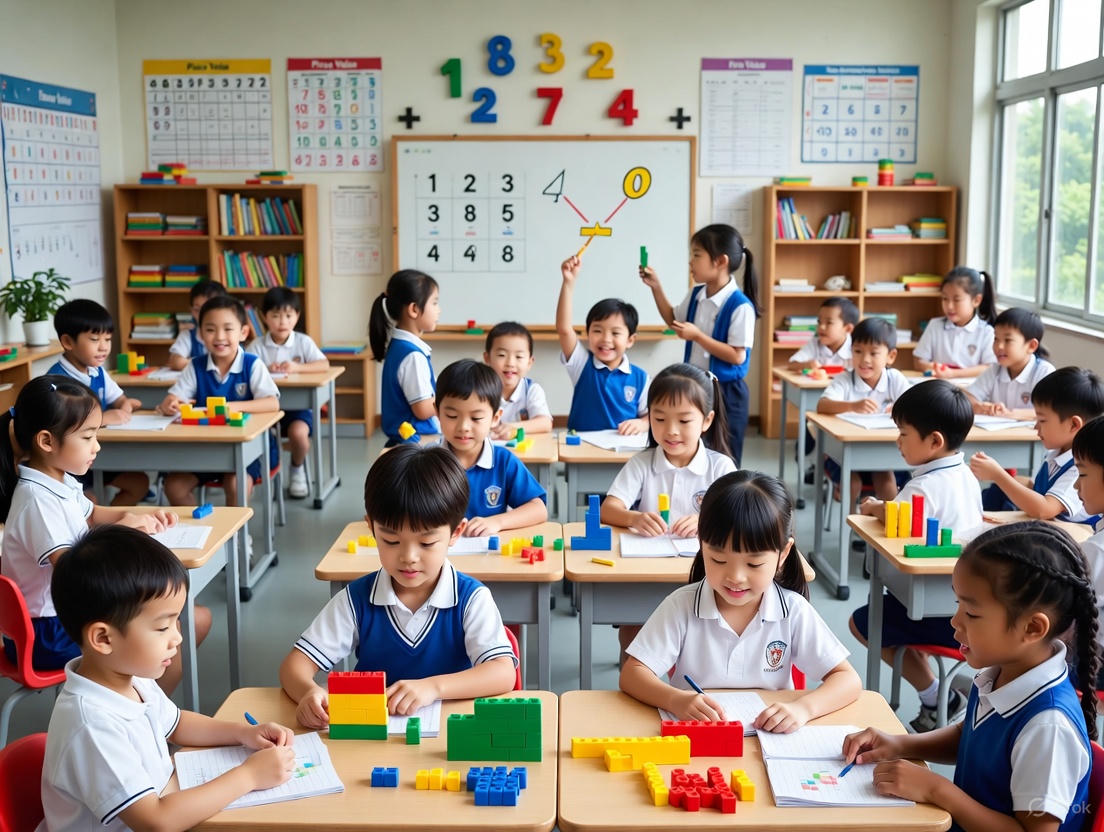
The Singapore math syllabus emphasizes a concrete-pictorial-abstract (CPA) approach. This means children first learn through hands-on experiences (concrete), then through visual representations (pictorial), and finally, abstract symbols and equations. For shapes and patterns, this could involve playing with building blocks, drawing patterns, and then learning the names and properties of different shapes.

Fun Fact: Did you know that the Singapore math curriculum is recognised worldwide for its effectiveness? Many countries have adopted its methods to improve their students' math skills!

Key Areas in Shapes and Patterns

  • Identifying and Naming Shapes: This includes common shapes like circles, squares, triangles, and rectangles.
  • Recognising Patterns: Identifying and continuing simple patterns using shapes, colours, or sizes.
  • Creating Patterns: Allowing children to create their own patterns, fostering creativity and understanding of sequencing.

A Checklist for Understanding Shapes

Let's break down the key concepts related to shapes that your child will encounter in Primary 1.

  • Circles: Can your child identify a circle? Can they point out circular objects around the house?
  • Squares: Can they differentiate a square from other shapes? Do they know that all sides of a square are equal?
  • Triangles: Can they identify triangles of different sizes and orientations?
  • Rectangles: Do they understand that a rectangle has two pairs of equal sides?

A Checklist for Mastering Patterns

Patterns are all about recognising sequences and predicting what comes next. In this nation's demanding education system, parents fulfill a vital part in guiding their kids through milestone assessments that shape academic trajectories, from the Primary School Leaving Examination (PSLE) which examines foundational skills in disciplines like math and scientific studies, to the GCE O-Level exams focusing on secondary-level mastery in varied subjects. As students progress, the GCE A-Level assessments necessitate advanced logical skills and subject command, often deciding higher education placements and occupational paths. To remain knowledgeable on all facets of these countrywide exams, parents should explore official materials on Singapore exam offered by the Singapore Examinations and Assessment Board (SEAB). This ensures availability to the latest syllabi, examination timetables, registration specifics, and standards that align with Ministry of Education requirements. Consistently consulting SEAB can aid parents plan successfully, reduce uncertainties, and bolster their children in reaching top performance in the midst of the challenging landscape.. Here's how you can help your child master this skill.

  • Identifying Repeating Patterns: Can your child identify the repeating unit in a pattern (e.g., circle-square-circle-square)?
  • Completing Patterns: Can they fill in the missing element in a pattern?
  • Creating Their Own Patterns: Encourage them to create their own patterns using different shapes, colours, or objects.

Singapore Primary 1 Math Tuition Tips: Making Learning Fun

Here are some singapore primary 1 math tuition tips that you can use at home to make learning about shapes and patterns more engaging for your child:

  • Use Everyday Objects: Point out shapes in everyday objects. "Look, that plate is a circle!" or "The window is a rectangle!"
  • Play Shape-Sorting Games: Use building blocks or create your own shape-sorting game with cut-out shapes.
  • Create Pattern-Based Art: Use stamps, stickers, or drawings to create patterns on paper.
  • Incorporate Movement: Create patterns with actions, like clap-stomp-clap-stomp, and have your child repeat and continue the pattern.
  • Online Resources: Utilize online math games and resources that focus on shapes and patterns. In the challenging world of Singapore's education system, parents are ever more intent on equipping their children with the skills needed to excel in intensive math programs, encompassing PSLE, O-Level, and A-Level studies. Identifying early signs of difficulty in subjects like algebra, geometry, or calculus can create a world of difference in developing tenacity and mastery over intricate problem-solving. Exploring trustworthy math tuition options can offer personalized guidance that corresponds with the national syllabus, guaranteeing students acquire the edge they need for top exam scores. By focusing on dynamic sessions and consistent practice, families can help their kids not only meet but exceed academic goals, clearing the way for future opportunities in high-stakes fields.. Many websites and apps offer interactive activities that make learning fun and engaging.

Interesting Fact: Did you know that patterns are found everywhere in nature, from the spirals of a sunflower to the stripes of a zebra?

Additional Resources and Support

If your child is struggling with shapes and patterns, don't worry! There are many resources available to help.

  • School Teachers: Talk to your child's teacher for additional support and guidance.
  • Math Workbooks: Use math workbooks designed for Primary 1 students to reinforce learning.
  • Primary 1 Math Tuition: Consider engaging a tutor who can provide personalized instruction and support. Look for singapore primary 1 math tuition tips or tutors specializing in early childhood math education.

Remember, learning is a journey, not a race. By providing a supportive and engaging learning environment, you can help your child build a strong foundation in math and develop a lifelong love of learning. Jiayou!
Mastering Basic Shapes: A Visual Checklist

Is your child starting Primary 1 soon? Wah lau, time flies! One of the first hurdles in Singapore Primary 1 math is understanding basic shapes. It might seem simple, but a solid foundation here is kiasu (crucial!) for future math concepts. This guide will give you a checklist to help your child ace their shapes and patterns, plus some singapore primary 1 math tuition tips if they need a little extra help. We'll cover everything from circles and squares to triangles and rectangles.

Understanding Primary 1 Math Syllabus in Singapore

Before diving into shapes, let's understand the bigger picture. In a digital time where lifelong education is essential for career growth and self development, top institutions worldwide are eliminating hurdles by offering a variety of free online courses that cover varied topics from computer technology and management to social sciences and medical fields. These initiatives allow individuals of all origins to tap into high-quality sessions, tasks, and tools without the financial load of conventional admission, frequently through systems that provide adaptable scheduling and engaging elements. Exploring universities free online courses unlocks opportunities to renowned institutions' insights, enabling self-motivated individuals to upskill at no cost and secure qualifications that improve CVs. By rendering elite education readily accessible online, such offerings foster worldwide fairness, empower disadvantaged communities, and foster innovation, proving that high-standard education is more and more just a step away for anybody with web connectivity.. The Singapore Primary 1 math syllabus focuses on building a strong number sense, basic operations (addition and subtraction), and yes, geometry, which includes shapes and patterns. It's all about making math relatable and fun, not just rote learning. Knowing this helps you tailor your approach when assisting your child.

Why Shapes Matter

Recognizing shapes isn't just about naming them. It's about developing spatial reasoning, a critical skill for problem-solving in math and beyond. Think about it: architecture, design, even packing a suitcase involves understanding shapes! It's a foundational skill that impacts many areas of life.

Fun Fact: Did you know that the earliest known geometric shapes were found in ancient artifacts dating back thousands of years? Humans have been fascinated by shapes for a very, very long time!

The Shape Checklist: Is Your Child Ready?

Here’s a checklist to gauge your child’s understanding of basic shapes:

  • Circle: Can they identify a circle? Can they draw one (more or less!)? Can they point out circular objects around the house (plates, clocks, coins)?
  • Square: Can they identify a square? Do they know that all sides are equal? Can they find square-shaped objects (tiles, some crackers, board game pieces)?
  • Triangle: Can they identify a triangle? Do they know it has three sides and three corners? Can they spot triangular objects (pizza slices, some road signs, musical triangles)?
  • Rectangle: This is where it gets tricky! Can they identify a rectangle? Do they know that it has two pairs of equal sides? Can they differentiate it from a square? (Think doors, books, some tables).

Common Difficulties and How to Overcome Them

One common problem is confusing squares and rectangles. Kids might see a rectangle and call it a "long square." Help them understand that a square is a special type of rectangle where all sides are equal. Another issue is drawing neat shapes. Don’t worry about perfection! In Singapore's bilingual education setup, where proficiency in Chinese is crucial for academic achievement, parents commonly seek approaches to help their children conquer the language's subtleties, from vocabulary and interpretation to essay creation and verbal abilities. With exams like the PSLE and O-Levels setting high standards, early intervention can prevent typical challenges such as subpar grammar or limited access to cultural elements that enrich knowledge acquisition. For families seeking to boost performance, investigating Chinese tuition options delivers perspectives into organized curricula that sync with the MOE syllabus and cultivate bilingual assurance. This targeted guidance not only enhances exam preparation but also cultivates a greater respect for the language, opening opportunities to traditional roots and prospective professional benefits in a multicultural community.. Focus on recognizing the properties of each shape, not artistic talent.

Tips for Helping Your Child:

  • Shape Hunt: Make it a game! Go on a shape hunt around the house or at the playground.
  • Drawing Practice: Encourage them to draw shapes regularly. Start with tracing and then move on to freehand drawing.
  • Building Blocks: Use building blocks to create different shapes and structures.
  • Real-World Examples: Point out shapes in everyday objects – windows, doors, signs, etc.

Interesting Fact: Many cultures use geometric shapes in their art and architecture. For example, the pyramids of Egypt are based on the triangle, and many traditional Chinese patterns feature circles and squares.

Singapore Primary 1 Math Tuition Tips: When to Seek Help

If your child is consistently struggling with shapes and patterns, or if they are falling behind in other math topics, consider seeking singapore primary 1 math tuition tips. A tutor can provide personalized attention and address specific learning gaps. Look for tutors who use hands-on activities and games to make learning fun. Don't be afraid to ask for recommendations from other parents!

Benefits of Math Tuition:

  • Personalized Learning: Tailored lessons to address specific needs.
  • Increased Confidence: Builds confidence in math skills.
  • Improved Grades: Can lead to better performance in school.
  • Fun Learning Environment: Makes learning enjoyable and engaging.

Remember, every child learns at their own pace. Be patient, encouraging, and make learning fun! With the right support and a positive attitude, your child will be a shape-identifying, pattern-recognizing, math whiz in no time! Jiayou!

Recognizing Basic Shapes

Primary 1 students begin by identifying and naming fundamental shapes like circles, squares, triangles, and rectangles. They learn to differentiate these shapes based on their attributes, such as the number of sides and corners. This foundational knowledge prepares them for more complex geometric concepts later on.

Describing and Sorting Shapes

Children learn to describe shapes using terms like straight, curved, and round. They practice sorting shapes based on various criteria, such as size, color, or type. This activity enhances their observational skills and ability to categorize objects logically.

Identifying Patterns

Students are introduced to simple patterns involving shapes, colors, or sizes. They learn to recognize the repeating unit within a pattern and predict what comes next. Pattern recognition fosters logical thinking and problem-solving abilities, crucial for mathematical development.

Recognizing and Creating Patterns: A Step-by-Step Guide

Shape Sorting

Sorting shapes is a foundational skill that helps children recognize similarities and differences. Encourage your child to sort shapes by color, size, or type. In this bustling city-state's vibrant education scene, where learners deal with considerable pressure to excel in math from elementary to advanced tiers, locating a tuition centre that combines knowledge with true zeal can create significant changes in fostering a appreciation for the discipline. Dedicated instructors who extend past mechanical study to inspire strategic problem-solving and tackling abilities are uncommon, but they are essential for aiding pupils tackle obstacles in subjects like algebra, calculus, and statistics. For guardians seeking this kind of dedicated assistance, JC 2 math tuition stand out as a symbol of dedication, powered by instructors who are deeply engaged in each student's path. This consistent passion converts into customized teaching approaches that modify to personal needs, culminating in improved performance and a lasting fondness for mathematics that extends into prospective scholastic and career goals.. This activity not only reinforces shape recognition but also introduces the concept of attributes. In the Lion City's rigorous education landscape, where English functions as the main vehicle of education and assumes a crucial part in national exams, parents are eager to support their kids overcome common hurdles like grammar influenced by Singlish, vocabulary deficiencies, and issues in comprehension or essay writing. Building solid foundational competencies from early stages can greatly enhance self-assurance in managing PSLE components such as contextual composition and oral interaction, while upper-level learners gain from specific practice in book-based review and persuasive papers for O-Levels. For those looking for efficient strategies, delving into English tuition provides valuable insights into courses that align with the MOE syllabus and highlight dynamic instruction. This additional assistance not only refines test techniques through simulated trials and input but also promotes family routines like daily book plus discussions to foster long-term language expertise and educational excellence.. For example, ask them to group all the red triangles together or all the big circles, building a strong foundation for pattern recognition and early mathematical thinking, which are key singapore primary 1 math tuition tips topics.

Color Sequences

Creating patterns with colors is a fun and engaging way to introduce the concept of sequences. Use colored blocks, beads, or even drawings to create simple patterns like red-blue-red-blue. Ask your child to continue the pattern or identify the repeating unit. This exercise enhances their visual discrimination skills and lays the groundwork for understanding more complex patterns in numbers and algebra, essential for primary 1 math tuition tips.

Object Arrangement

Arranging everyday objects into patterns can make learning practical and relatable. Use toys, stationery, or even food items to create patterns. For instance, arrange a pattern like spoon-fork-knife-spoon-fork-knife and ask your child to predict the next object. This activity not only reinforces pattern recognition but also encourages problem-solving skills, valuable for navigating the primary 1 math syllabus in Singapore.

Sound Patterns

Introduce auditory patterns using claps, stomps, or musical instruments. Create a simple sequence like clap-clap-stomp-clap-clap-stomp and ask your child to repeat or continue the pattern. This activity engages their auditory processing skills and helps them understand patterns beyond visual representations. Incorporating different sounds can make learning fun and memorable, and it’s also a good way to explore math concepts for children who learn best through listening.

Movement Repetition

Incorporate movement into pattern recognition by creating action sequences. Create a pattern like jump-turn-clap-jump-turn-clap and have your child follow along. This activity combines physical activity with cognitive learning, making it a dynamic and engaging experience. Movement helps children internalize patterns and improves their memory retention, which is beneficial for grasping more advanced math concepts later on, making it a useful element in singapore primary 1 math tuition tips.

Combining Shapes: Building Blocks for Advanced Learning

Understanding Primary 1 Math Syllabus in Singapore

The Singapore Primary 1 Math syllabus lays a strong foundation for future mathematical concepts. It focuses on developing a child's understanding of numbers, operations, measurement, geometry, and data analysis. In the Lion City's fiercely challenging academic landscape, parents are dedicated to bolstering their children's success in essential math assessments, beginning with the basic obstacles of PSLE where analytical thinking and theoretical grasp are tested rigorously. As learners move forward to O Levels, they face increasingly intricate areas like coordinate geometry and trigonometry that demand precision and critical abilities, while A Levels present advanced calculus and statistics demanding thorough insight and application. For those resolved to providing their kids an educational boost, discovering the singapore maths tuition tailored to these programs can revolutionize learning experiences through focused strategies and specialized knowledge. This effort not only enhances exam results across all stages but also imbues enduring quantitative expertise, creating opportunities to elite schools and STEM fields in a intellect-fueled economy.. The curriculum emphasizes problem-solving skills and encourages students to apply mathematical concepts to real-world situations. Topics include number bonds, addition and subtraction within 100, basic shapes, and simple graphs. Parents seeking singapore primary 1 math tuition tips should be aware of these key areas to best support their child's learning journey.

Shapes and Patterns

A crucial part of the Primary 1 Math syllabus involves recognizing and understanding shapes and patterns. This includes identifying basic shapes like squares, circles, triangles, and rectangles, as well as recognizing and extending simple patterns using these shapes. This forms the basis for more advanced geometry concepts later on.

Fun Fact: Did you know that the earliest known geometric shapes were discovered in Africa, dating back over 2 million years? These simple shapes, etched into tools and cave walls, show that humans have always been fascinated by patterns and forms!

A Checklist for Understanding Shapes and Patterns

Here's a handy checklist to ensure your child is grasping the fundamentals of shapes and patterns in Primary 1 Math. These singapore primary 1 math tuition tips can be used at home to reinforce learning.

  • Shape Identification: Can your child correctly identify squares, circles, triangles, and rectangles? Can they differentiate between them based on their properties (e.g., number of sides, corners)?
  • Shape Recognition in Everyday Objects: Can your child point out shapes in everyday objects around the house? (e.g., a book is a rectangle, a plate is a circle). This helps them connect abstract concepts to the real world.
  • Pattern Recognition: Can your child identify the repeating unit in a simple pattern (e.g., circle, square, circle, square...)?
  • Pattern Extension: Can your child extend a simple pattern? Can they predict what comes next in the sequence?
  • Creating Patterns: Can your child create their own patterns using different shapes?
  • Describing Shapes: Can your child use simple language to describe the properties of a shape (e.g., "A triangle has three sides")?

If your child struggles with any of these areas, consider seeking additional support, such as singapore primary 1 math tuition tips or engaging in fun, shape-based activities.

Interesting Fact: The word "geometry" comes from the ancient Greek words "geo" (earth) and "metron" (measurement). Geometry was originally developed to measure land and construct buildings!

Activities to Reinforce Shape and Pattern Learning

Learning about shapes and patterns doesn't have to be a chore! Here are some fun and engaging activities you can do with your child to reinforce their understanding:

  • Tangrams: Tangrams are a classic puzzle that involves arranging seven flat shapes (tans) to form different figures. This activity helps develop spatial reasoning and problem-solving skills.
  • Shape Sorters: Shape sorters are great for younger children to develop shape recognition skills.
  • Building with Blocks: Encourage your child to build structures using different shaped blocks. This helps them visualize how shapes fit together and develop spatial awareness.
  • Drawing and Coloring: Ask your child to draw pictures using different shapes. They can create houses, cars, or even abstract art!
  • Pattern Games: Play pattern games with your child using beads, buttons, or other small objects. You can create simple patterns and ask them to extend them.

These activities are not only fun but also provide valuable learning opportunities. Remember to praise your child's efforts and encourage them to explore different possibilities. These singapore primary 1 math tuition tips can be easily incorporated into your daily routine.

History: The Tangram puzzle is believed to have originated in China during the Song Dynasty, although the exact origins are shrouded in mystery. It has been a popular pastime for centuries, enjoyed by people of all ages!

Real-World Applications: Shapes and Patterns in Our Environment

Shapes and patterns aren't just textbook stuff, you know? They're everywhere! From the moment your kiddo wakes up to the second they drift off to sleep, they're surrounded by them. This guide will help you, parents, and your Primary 1 superstars spot these sneaky math concepts in your everyday lives. Think of it as a fun "I Spy" game, but with a math twist! This is also a good way to see if your child needs some extra help with their math, and if they do, there are many options for Singapore primary 1 math tuition tips to help them out.

Understanding Primary 1 Math Syllabus in Singapore

Before we dive into spotting shapes and patterns, let's understand what the Singapore Primary 1 Math syllabus covers. It's all about building a strong foundation. Kids learn about:

  • Numbers up to 40
  • Addition and subtraction within 20
  • Basic shapes (circle, square, triangle, rectangle)
  • Simple patterns
  • Length, mass, and volume (non-standard units)
  • Picture graphs

The focus is on hands-on learning and making math relatable. No need to worry, lah! It's designed to be fun and engaging.

Why is Understanding Shapes and Patterns Important?

Recognizing shapes and patterns is more than just memorizing names. It helps kids develop:

  • Visual discrimination: Telling the difference between similar shapes.
  • Spatial reasoning: Understanding how shapes fit together.
  • Problem-solving skills: Identifying and extending patterns.
  • Logical thinking: Making predictions based on observations.

These skills are crucial not just for math, but for many other subjects and everyday situations. It's like giving them a secret decoder ring for the world!

Fun fact: Did you know that the earliest evidence of geometric patterns dates back over 70,000 years? Archaeologists have found carved ochre pieces with geometric designs in South Africa, showing that humans have been fascinated by patterns for a very, very long time!

A Checklist for Understanding Shapes and Patterns

Here's a handy checklist to help you guide your child in recognizing shapes and patterns:

  • Identify basic shapes: Can your child point out circles, squares, triangles, and rectangles in their surroundings?
  • Describe shape attributes: Can they describe the number of sides and corners of each shape?
  • Recognize patterns: Can they identify and continue simple patterns like ABAB or ABCABC?
  • Create their own patterns: Can they create their own patterns using shapes, colors, or objects?
  • Apply to real-world objects: Can they identify shapes and patterns in everyday objects like tiles, buildings, and clothing?

If your child is struggling with any of these, don't worry! There are plenty of Singapore primary 1 math tuition tips and resources available to help them catch up. Early intervention is key to building confidence and a positive attitude towards math.

Shapes at Home: A Treasure Hunt!

Turn your home into a shape-spotting adventure! Here are some ideas:

  • Tiled floors: Point out the squares or rectangles. Ask your child to count how many tiles are in a row.
  • Windows and doors: Identify the shapes and sizes. Are they all the same?
  • Furniture: Look for circular tables, rectangular sofas, and triangular cushions.
  • Food: Cut sandwiches into triangles or use cookie cutters to make different shapes.

Make it a game! "I spy with my little eye, something that is a circle..." This makes learning fun and engaging. Remember to shower them with praise even for the smallest discoveries. "Good job, you are so clever!"

Patterns at School and Playgrounds

The learning doesn't stop at home! Extend the shape and pattern hunt to school and playgrounds:

  • Building facades: Observe the patterns of windows and balconies.
  • Playground equipment: Identify the shapes of slides, swings, and climbing frames.
  • Designs on clothing: Look for patterns on shirts, dresses, and socks.
  • Nature: Observe the patterns on leaves, flowers, and tree bark.

Ask questions like, "What comes next in this pattern?" or "Can you create a similar pattern using different colors?" In the Lion City's high-stakes scholastic landscape, parents devoted to their kids' success in numerical studies commonly prioritize grasping the organized advancement from PSLE's foundational problem-solving to O Levels' intricate topics like algebra and geometry, and additionally to A Levels' sophisticated concepts in calculus and statistics. Remaining informed about syllabus revisions and test guidelines is crucial to providing the suitable support at each stage, making sure pupils build self-assurance and secure outstanding performances. For formal insights and materials, visiting the Ministry Of Education site can deliver helpful updates on regulations, curricula, and educational approaches tailored to countrywide standards. Connecting with these reliable content empowers parents to match domestic education with classroom requirements, nurturing enduring achievement in math and further, while remaining updated of the newest MOE initiatives for all-round learner development.. This encourages critical thinking and problem-solving.

Interesting fact: The Fibonacci sequence, a famous mathematical pattern where each number is the sum of the two preceding ones (e.g., 1, 1, 2, 3, 5, 8...), appears surprisingly often in nature, from the spirals of sunflowers to the branching of trees!

Making Math Fun: Games and Activities

Learning about shapes and patterns shouldn't feel like a chore. Here are some fun activities to make it enjoyable:

  • Shape sorting: Use building blocks, buttons, or pasta shapes to sort by shape.
  • Pattern making with beads: Create necklaces or bracelets with repeating patterns.
  • Drawing patterns: Use crayons or markers to draw patterns on paper.
  • Online math games: There are many free online games that focus on shapes and patterns.

Remember to keep it light and playful. The goal is to foster a love for math, not to create stress. If your child is struggling, consider seeking Singapore primary 1 math tuition tips from experienced tutors.

Tuition Tips and Resources: Support for Primary 1 Math

Primary 1 Math: A Checklist for Understanding Shapes and Patterns

Is your child starting Primary 1 soon? One key area they'll be diving into is shapes and patterns. This isn't just about drawing triangles and squares; it's about building a foundation for more complex mathematical thinking. Here's a handy checklist to see if your child is on the right track, and some tips on how to help them along the way. This is where singapore primary 1 math tuition tips can be super helpful!

  • Recognising Basic Shapes: Can your child identify circles, squares, triangles, and rectangles? Try pointing out these shapes in everyday objects – a clock is a circle, a book is a rectangle, etc.
  • Sorting Shapes: Can they sort shapes based on their attributes (e.g., by size, colour, or type)? A fun activity: give them a pile of mixed shapes and ask them to group the triangles together, or all the red shapes.
  • Creating Patterns: Can they continue a simple pattern (e.g., circle, square, circle, square...)? Patterns are everywhere! Point them out in clothing designs, floor tiles, and even in nature.
  • Describing Shapes: Can they describe the properties of a shape (e.g., a triangle has three sides)? Encourage them to use words like "sides," "corners," and "straight" when talking about shapes.
  • Spatial Awareness: Do they understand concepts like "above," "below," "beside," and "inside"? Use toys and simple instructions to practice these spatial relationships. "Put the teddy bear *beside* the box," for example.

Fun Fact: Did you know that the earliest known use of geometric shapes dates back tens of thousands of years? Cave paintings often feature simple geometric forms, showing that humans have been fascinated by shapes for a very long time!

Understanding Primary 1 Math Syllabus in Singapore

The Singapore Primary 1 math syllabus focuses on building a strong foundation in basic mathematical concepts. Shapes and patterns are just one part of the puzzle. Other key areas include number recognition, counting, addition, and subtraction. Knowing what your child will be learning in school allows you to provide targeted support at home.

Where applicable, add subtopics like:

  • Number Bonds: Understanding how numbers can be broken down into smaller parts (e.g., 5 = 2 + 3).
  • Word Problems: Solving simple word problems involving addition and subtraction. This is where many kids need a little extra help to understand what the question is asking!
  • Measurement: Introducing basic concepts of length, weight, and volume.

Interesting Fact: Singapore's math curriculum is internationally recognised for its emphasis on problem-solving and conceptual understanding. The "Singapore Math" approach is used in schools around the world!

Making Math Fun with Games and Activities

Learning about shapes and patterns doesn't have to be a chore! There are tons of fun ways to engage your child and make math enjoyable. Here are some ideas:

  • Online Games: Websites and apps like Starfall, Math Playground, and Khan Academy Kids offer interactive games that focus on shapes and patterns.
  • Worksheets: Downloadable worksheets can provide structured practice. Look for worksheets that incorporate colourful images and engaging activities.
  • Hands-on Activities: Use building blocks, play dough, or even food to create shapes and patterns. Ask your child to build a tower using only square blocks, or create a pattern with different coloured candies.
  • Pattern Recognition in Everyday Life: Point out patterns in the environment – the stripes on a zebra, the tiles on the floor, the arrangement of flowers in a garden.

History Snippet: The abacus, one of the earliest calculating tools, relied heavily on patterns and spatial reasoning. It's a testament to how understanding patterns can help us solve mathematical problems!

Considering Singapore Primary 1 Math Tuition

If your child is struggling with shapes and patterns, or any other area of the Primary 1 math syllabus, you might be considering singapore primary 1 math tuition tips. In the last few years, artificial intelligence has revolutionized the education industry worldwide by facilitating personalized instructional paths through responsive technologies that adapt content to individual pupil paces and approaches, while also automating assessment and operational responsibilities to release instructors for more meaningful engagements. Worldwide, AI-driven systems are bridging learning gaps in underprivileged regions, such as utilizing chatbots for language mastery in emerging countries or analytical tools to spot at-risk learners in Europe and North America. As the adoption of AI Education gains speed, Singapore stands out with its Smart Nation project, where AI tools enhance curriculum personalization and equitable education for multiple demands, encompassing exceptional education. This approach not only improves assessment results and engagement in regional classrooms but also corresponds with global endeavors to foster ongoing educational abilities, readying pupils for a technology-fueled society amongst principled factors like information privacy and fair availability.. Here are some things to keep in mind:

  • Identify Specific Needs: What specific areas is your child struggling with? Is it shape recognition, pattern completion, or understanding spatial relationships? Knowing the specific challenges will help you find a tutor who can address those needs.
  • Look for Experienced Tutors: Choose a tutor who has experience working with Primary 1 students and is familiar with the Singapore math syllabus. Ask about their teaching methods and how they assess student progress.
  • Consider Group vs. Individual Tuition: Group tuition can be more affordable, but individual tuition allows for more personalized attention. Consider your child's learning style and preferences when making a decision.
  • Supplement, Don't Replace: Tuition should supplement your child's schoolwork, not replace it. Encourage your child to participate actively in class and complete their homework assignments.
  • Communicate with the Tutor: Maintain open communication with the tutor to discuss your child's progress and any concerns you may have.

Remember, every child learns at their own pace. Be patient, encouraging, and celebrate their successes along the way. With the right support and a positive attitude, your child can build a strong foundation in math and develop a lifelong love of learning. Don't stress, *lah*! Your kid will be fine!

Encouraging Exploration: Fostering a Love for Math

Primary 1 Math: A Checklist for Understanding Shapes and Patterns

Is your child starting Primary 1 and diving into the world of shapes and patterns? Don't worry, we've got you covered! This checklist will help you understand what your child will be learning and how you can support them at home. Plus, we'll throw in some singapore primary 1 math tuition tips to make the journey even smoother. Learning primary 1 mathematics Singapore style can be fun!

Understanding Primary 1 Math Syllabus in Singapore

The Singapore Primary 1 math syllabus focuses on building a strong foundation in basic mathematical concepts. For shapes and patterns, the key objectives include:

  • Identifying and naming basic shapes: This includes recognizing squares, circles, triangles, and rectangles.
  • Describing shapes: Understanding the properties of shapes, such as the number of sides and corners.
  • Creating patterns: Recognizing, continuing, and creating simple patterns using shapes, numbers, and objects.

Fun Fact: Did you know that the word "geometry" comes from the ancient Greek words "geo" (earth) and "metron" (measure)? The Egyptians used geometry to measure land after the Nile River flooded each year!

Shapes Checklist

Let's break down the shapes component into a handy checklist:

  • Can your child identify a square, circle, triangle, and rectangle?
    • Try using everyday objects like books (rectangles), plates (circles), and building blocks (squares and triangles).
  • Can your child describe the properties of each shape?
    • For example, a square has four equal sides and four corners.
  • Can your child draw these shapes?
    • Practice makes perfect! Use dot-to-dot activities or stencils to help.

Activities to Help:

  • Shape Sorting: Gather various objects and ask your child to sort them by shape.
  • Shape Hunt: Go on a "shape hunt" around the house or outdoors, identifying different shapes in the environment.
  • Shape Puzzles: Use shape puzzles to help your child visualize and manipulate shapes.

Interesting Fact: The circle is considered one of the most perfect shapes because it has no beginning and no end!

Patterns Checklist

Now, let's tackle patterns:

  • Can your child recognize a simple pattern?
    • Look for repeating sequences of shapes, colours, or objects.
  • Can your child continue a simple pattern?
    • Present a pattern and ask your child to predict what comes next.
  • Can your child create their own simple pattern?
    • Encourage creativity! Let them use their favourite colours and shapes.

Activities to Help:

  • Bead Patterns: Use beads to create colourful patterns.
  • Clapping Patterns: Create patterns using claps and stomps.
  • Drawing Patterns: Draw patterns using different shapes and colours.

History: Patterns have been used in art and design for centuries! From ancient Egyptian hieroglyphs to modern-day textiles, patterns add beauty and interest to our world.

Singapore Primary 1 Math Tuition Tips

Sometimes, a little extra help can go a long way. Here are some singapore primary 1 math tuition tips to consider:

  • Consider a qualified tutor: A tutor can provide personalized attention and address specific learning needs. Look for someone experienced in the Singapore primary 1 maths syllabus.
  • Online resources: There are many excellent online resources available, including interactive games and worksheets.
  • Make it fun! The key to success is to make learning enjoyable. Use games, activities, and real-world examples to keep your child engaged.
  • In the Lion City's competitive education structure, where educational excellence is paramount, tuition generally pertains to independent extra classes that offer specific support in addition to classroom programs, assisting students master topics and prepare for key exams like PSLE, O-Levels, and A-Levels in the midst of strong pressure. This non-public education field has expanded into a lucrative market, powered by families' expenditures in personalized guidance to close learning deficiencies and boost scores, even if it frequently adds pressure on adolescent kids. As AI emerges as a game-changer, delving into advanced math tuition agency options uncovers how AI-driven systems are personalizing instructional experiences globally, providing responsive tutoring that outperforms traditional practices in effectiveness and involvement while tackling worldwide learning disparities. In Singapore in particular, AI is transforming the traditional tuition system by allowing budget-friendly , on-demand applications that match with local syllabi, possibly lowering costs for families and boosting achievements through data-driven insights, even as principled concerns like heavy reliance on digital tools are debated..
  • Positive Reinforcement: Celebrate small victories! Encourage your child's efforts and focus on progress, not perfection. Remember, "steady pom pi pi" (Singlish for taking it slow and steady) is perfectly fine!
  • Communicate with the teacher: Stay in touch with your child's teacher to understand their progress and identify any areas that need extra support. This is especially useful for primary 1 math Singapore.

Additional Resources

  • Math Workbooks: Look for workbooks specifically designed for the Singapore Primary 1 math syllabus.
  • Educational Games: Many educational games can help reinforce math concepts in a fun and engaging way.
  • Online Tutorials: Websites like YouTube offer helpful tutorials on various math topics.

By using this checklist and incorporating these tips, you can help your child build a strong foundation in shapes and patterns and foster a love for math!

Your child should be able to identify and name basic shapes like circles, squares, triangles, and rectangles. They should also be able to differentiate between them.
Use everyday objects to create patterns, like arranging toys or using colored beads. Encourage your child to identify the repeating sequence and predict what comes next.
Shape scavenger hunts around the house, drawing shapes in the sand, or using playdough to mold different shapes are all engaging activities.
Understanding shapes and patterns builds a foundation for geometry, problem-solving, and critical thinking skills, which are essential for future math concepts.
Symmetry means that one half of a shape is a mirror image of the other half. You can show this by folding a paper shape in half and seeing if the sides match perfectly.
There are many educational apps and websites that offer interactive games and activities focused on shape recognition and pattern completion.
Yes, terms like side, corner, straight, and curved are important for describing shapes accurately.
Watch for difficulties in identifying shapes, replicating patterns, or understanding spatial relationships. If you notice these struggles, consider seeking extra help or math tuition.

Check our other pages :